
“I have had significant economic damage to my crops from herbicide drift.” — Teresa Brockman, Sunny Lane Fruit and Vegetable Farm, Eureka, Illinois
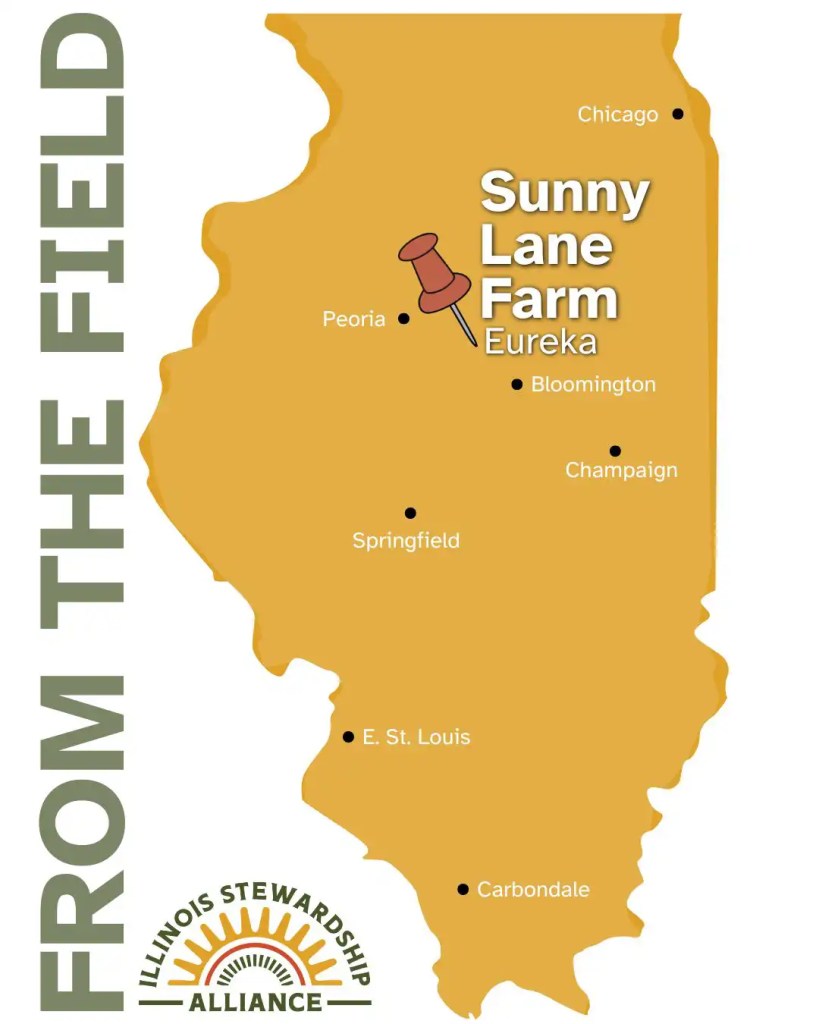
On the rolling prairie just outside of Peoria, Teresa Brockman has spent decades building Sunny Lane Fruit and Vegetable Farm into a place where Central Illinois families come for fresh food and flowers. Visitors are greeted by rows of tomatoes, herbs, and vegetables, beds of blueberry bushes, and an orchard filled with pears, cherries, hardy kiwi, and apple trees—including a beloved 25-year-old apple tree affectionately named Liberty.
But Sunny Lane Farm is more than a beautiful place to visit. It is Teresa’s livelihood, the source of fresh food for hundreds of Illinois families, and the income that supports her employees and her family.
So when the leaves on her crops began curling, twisting, and dying, Teresa knew something was terribly wrong. Surrounded by acres of corn and soybean fields, she suspected pesticide drift.
Last year alone, herbicide drift destroyed more than 1,000 vegetable starts, causing thousands of dollars in losses and wiping out months of work before many plants ever reached the field. In addition to the monetary loss, Teresa noted “I feel like I disappointed and let down hundreds of customers throughout central and northern Illinois who have come to rely on buying my plant starts for their gardens.”
Like many farmers, Teresa reported the damage to the Illinois Department of Agriculture and sought answers. But proving exactly where drifting pesticides came from—and who applied them—can be extremely difficult, especially when some herbicides can volatilize after application and move long distances from where they were sprayed.
Even when a misapplication is confirmed, enforcement often results in little more than a warning or modest fine. Meanwhile, the farmer whose crops were damaged is left to absorb the financial loss.
For farmers like Teresa, the question isn’t simply who is responsible—it’s how to keep it from happening again.
Unfortunately, Teresa’s story is becoming increasingly common.
Across Illinois, fruit and vegetable growers, orchardists, regenerative farmers, and beekeepers are raising concerns about crop damage, bee losses, and declining yields they believe are linked to pesticide drift and volatilization.
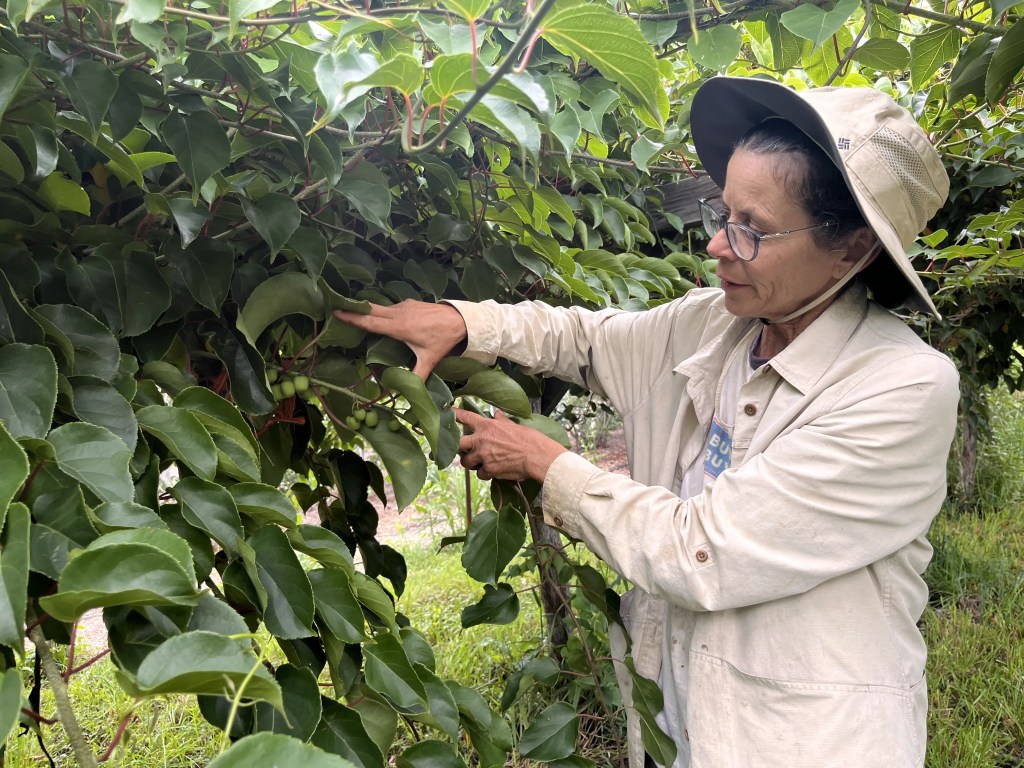
Above: Teresa Brockman inspects grapes on her farm outside of Peoria that show obvious signs of pesticide injury
“We have been hit by pesticide drift damage three years in a row now, with tens of thousands of dollars of lost revenue due to damaged peppers, tomatoes, summer squash, cucumbers, okra, and tomatillos. We’re now also concerned about the hundreds of fruit and nut trees we’ve planted in recent years in order to better feed our community and provide ecological benefits to our farm.”— Traci, Sola Gratia Farm, Central Illinois
“In the past, our farm was surrounded by conventional corn and soybean fields. We lost both hives of bees after a neighboring field was sprayed without warning, preventing us from protecting the hives. On our current farm, we believe drift has once again damaged our raspberries, blackberries, and fruit trees.”— Ryder Family Farms, Southern Illinois
“One year we had to rent a buffer strip from a neighbor that we couldn’t even farm, just to protect the land we’ve invested years in keeping free of pesticides.”— Shire Regenerative Farm, Northwest Illinois
“Last year spray drift killed 10 acres of our organic corn.”— Dave Bishop, PrairiErth Farm, Central Illinois
“I am a beekeeper, and this year chemicals killed some of my beehives at two different locations.”— Oscar Villa, Northeast Illinois
“I continually experience drift damage on my annual and perennial crops. The neighboring applicator and I now have an agreement that they’re supposed to call before spraying adjacent farmland, so I at least know when applications are happening.”— Josh Snedden, North Central Illinois
These stories represent different farms, different crops, and different parts of Illinois—but they all point to the same challenge.
This isn’t simply a conflict between different kinds of farmers.
Fruit and vegetable growers, orchardists, beekeepers, and row crop farmers all depend on successful harvests to support their families and businesses.

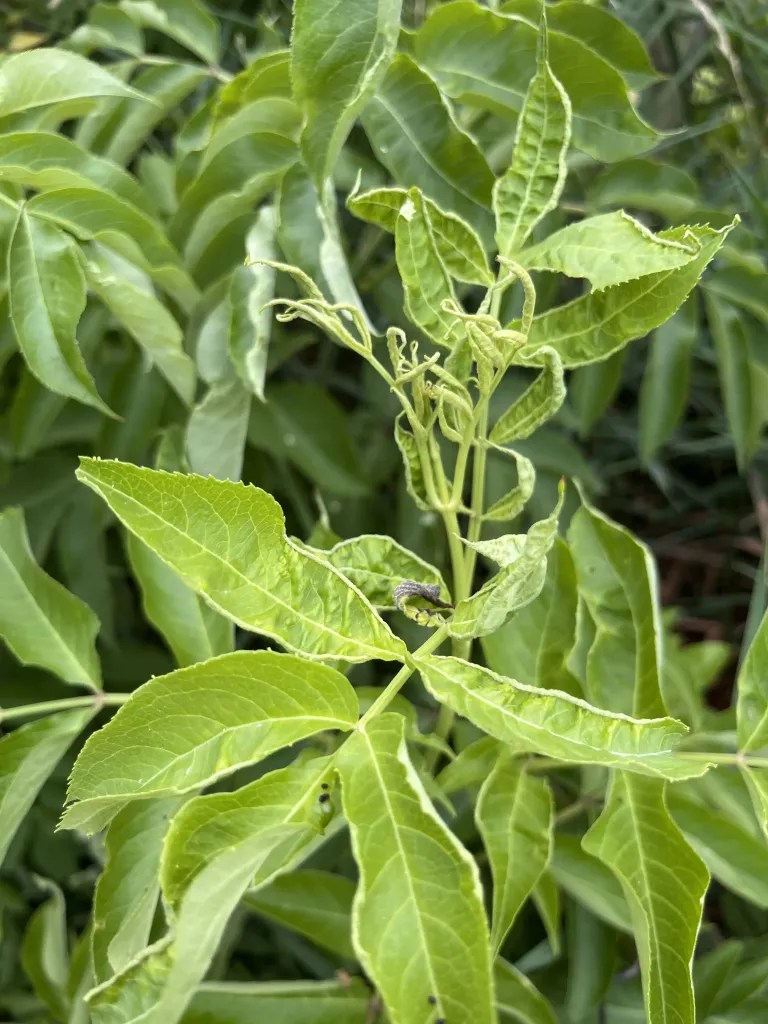
Left: Teresa Brockman explains how pesticide drift has affected her vegetable plot. Right: Leaves affected by pesticide drift twist and curl.
Many row crop farmers are also under tremendous economic pressure. Where previous generations could make a living farming a few hundred acres, today’s economics often require managing far more land with fewer people. Herbicides have become an essential tool for many operations, but as weeds become increasingly resistant, newer products have become more powerful—and some formulations can also be more prone to moving beyond their intended target under certain conditions.
No farmer wants to damage a neighbor’s livelihood. Yet more and more Illinois farmers are finding themselves on both sides of a system that isn’t working well for anyone.
Illinois needs practical solutions that reduce pesticide drift, protect neighboring farms, and ensure that every farmer—whether they grow corn, soybeans, fruits, vegetables, or raise bees—can thrive.
Has pesticide drift affected your farm?
Illinois Stewardship Alliance is working with farmers across the state to better understand the scope of pesticide drift and identify practical, farmer-driven solutions.
If you’ve experienced pesticide drift, herbicide volatilization, crop damage, bee losses, or other impacts you believe may be related, we want to hear your story.
Every story helps paint a clearer picture of what’s happening on Illinois farms. Together, we can identify patterns, develop solutions, and build the momentum needed for meaningful solutions.
After you submit your story, a member of the Illinois Stewardship Alliance team may reach out to learn more.
Your story could help protect another Illinois farm from experiencing the same losses. Share your story today.
If you suspect pesticide drift has occurred on non-agricultural lands– such as your yard or garden, complete the pesticide reporting form with our partners at Prairie Rivers Network.