Are you a farmer using Illinois’ cottage food law to add value to your crops? Have you run into roadblocks that make it harder to grow your business?
We want to hear from you.
Across Illinois, farmers are using the cottage food law to turn fruits, vegetables, honey, baked goods, jams, fermented foods, and other farm products into successful businesses. But as those businesses grow, many farmers are discovering that strict regulations, limited commercial kitchen options, and other barriers make it difficult to take the next step.
We’re collecting stories from farmers and cottage food producers across Illinois to better understand these challenges and organize around solutions.
Your story can help shape future policy to better support farms and cottage food producers across Illinois

One farmer who knows these challenges well is Yui Alde.
For Yui Alde, making fermented sauerkraut and kimchi isn’t simply a business—it’s a way to keep her family’s farming operation alive.
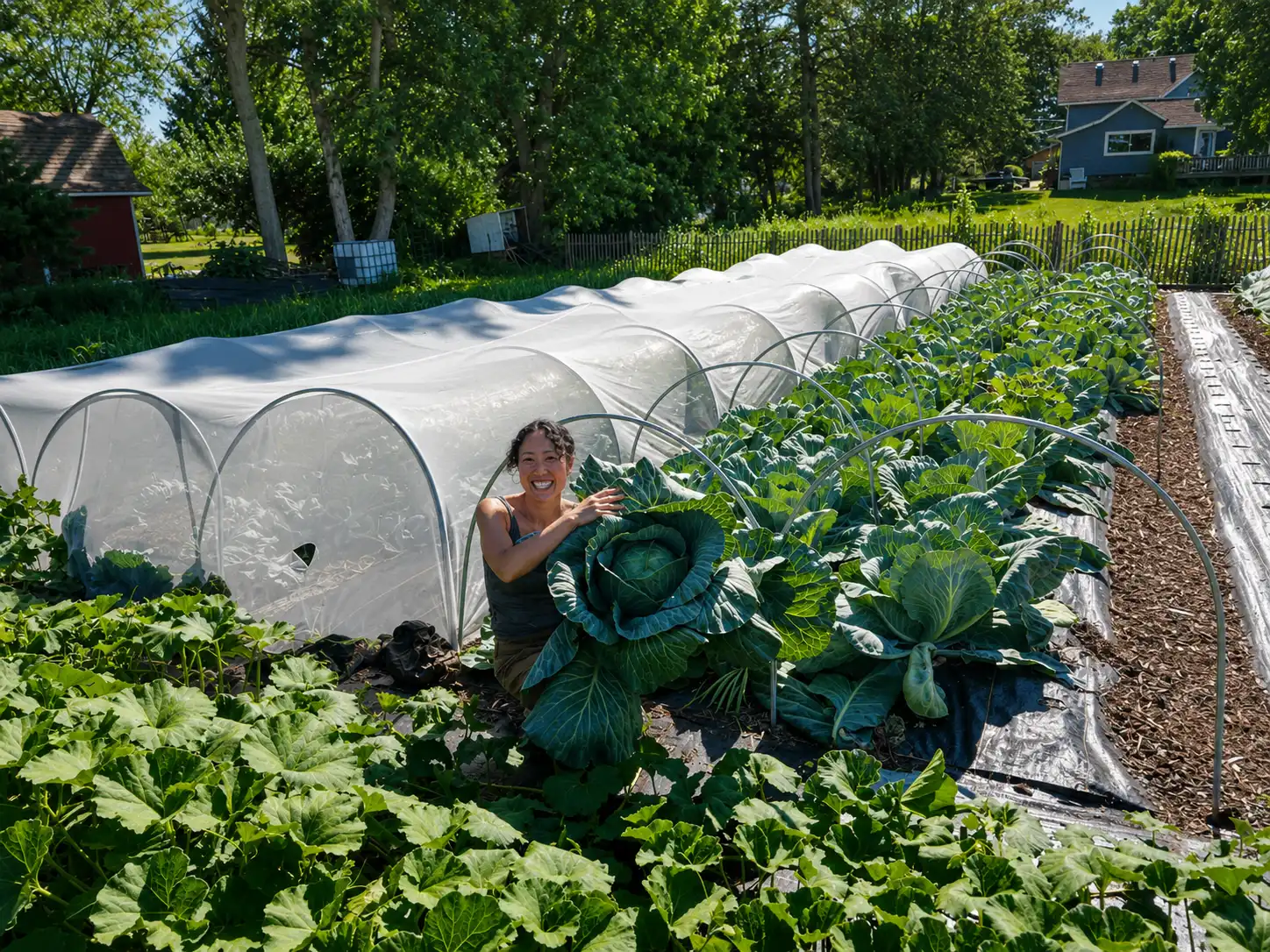
On her small farm outside Shabbona, Illinois, Yui grows cabbage, garlic, onions, ginger, tomatoes, cucumbers and other vegetables. By turning those crops into fermented foods, she’s able to earn enough from a single cabbage to support her family.
“I can take a $5 cabbage, ferment it into five jars of kimchi, and sell each jar for $14,” Yui says.
That kind of value-added farming has allowed her home-kitchen business to grow into a thriving local enterprise with two employees and more than 25 varieties of fermented vegetables, juices and other gut-healthy foods.
But now, the same cottage food law that helped her get started is preventing her from taking the next step.

A Family Tradition Born from Resilience
Yui’s passion for fermented foods began generations ago.
Her great-grandmother survived the atomic bombing of Hiroshima. Left to raise four children on her own with few opportunities to earn a living, she traveled each week to nearby farms to purchase cabbage, then returned home to transform it into fermented napa cabbage that she sold to neighbors.
That simple business fed her family and eventually put all four of her children through college.
Yui never expected to follow in those footsteps.
She studied fashion merchandising and spent more than 20 years working in that industry, including as a visual merchandiser for Zara, before marriage brought her to rural Illinois.
“I got married and ended up in the middle of a cornfield,” she laughs.
Gardening began as a way to cope with postpartum depression after the birth of her first child. The depression faded, but her love of growing food remained.
As her children later experienced symptoms associated with ADHD and autism, she became increasingly interested in nutrition and the role fermented foods could play in supporting gut health.
Soon, she was growing vegetables specifically to ferment them into kimchi, sauerkraut and other probiotic-rich foods.

A Business Ready to Grow
Illinois’ cottage food law made that possible.
The law allows people like Yui to prepare certain foods in their home kitchens and sell them directly to consumers.
Without it, she says, her family likely would have stopped farming years ago.
“I’m very, very thankful for the cottage food law,” Yui says. “Without the cottage license we would have stopped farming five years ago because it’s too hard to make a living growing vegetables unless you have a 30-acre farm.”
But after eight years of building a successful business, she’s running into limits that have nothing to do with customer demand.
Local farms have asked to carry her products in their farm stores and market stands—but current law doesn’t allow it because cottage foods generally must be sold directly to consumers.
She’d like to ship her refrigerated fermented foods to customers around Illinois—but only shelf-stable cottage foods may be shipped.
She even explored installing refrigerated vending machines in places like hospitals so customers could purchase her products throughout the day, but current regulations don’t allow that either.
“The opportunities are there,” Yui says. “The law just doesn’t allow us to reach them.”

Scaling Up Isn’t So Simple
People often assume the next step is simply moving into a commercial kitchen.
For many rural farmers, that isn’t realistic.
Yui has spent the past five years looking for a commercial space near her farm.
There are no shared kitchens nearby with enough room for her equipment.
The buildings that are available don’t have walk-in coolers or the infrastructure she needs.
Renovating one building was estimated to cost more than $500,000. Converting her garage into a commercial kitchen came with a $400,000 price tag.
Neither option is financially possible.
“Eight years is too long to be a cottage food producer,” Yui says. “I need more opportunities to grow.”

We Want to Hear From More Farmers
Yui’s story isn’t unique.
Across Illinois, many farmers are using the cottage food law to create value-added products that help make small farms financially viable. As their businesses grow, they’re encountering new challenges that current laws and regulations weren’t designed to address.
If you’re a farmer or cottage food producer facing barriers to growing your business, we want to hear from you.
Whether you’ve struggled with cottage food regulations, finding commercial kitchen space, scaling up, or another obstacle, your story can help us better understand what’s working, what isn’t, and where policy changes may be needed.
Share your story today and help us build solutions that allow Illinois farmers to grow.