Across Illinois, farmers and the communities that depend on them, are being impacted by pesticide drift. And they’re speaking out.
If pesticide drift has damaged your crops, affected your farm, or disrupted your livelihood, we want to hear from you. By sharing your experience, you’ll help us better understand the scope of the problem and organize farmers to develop and advocate for practical solutions.

“I’ve got tens of thousands of dollars wrapped up in this—and it’s all ruined.”
For Thomas “Tommy” Putnam, farming isn’t just a job—it’s the dream he’s spent his entire life building.
When Tommy was eight years old, his parents built a greenhouse. With some success, they later purchased property outside of Galesburg with standing greenhouses and built a family business growing tomatoes. Eight years ago, Tommy fulfilled a lifelong goal when he took over the operation himself from his mother.
“I fixed up all the greenhouses and got them running again,” Tommy says proudly.
Today, he works what amounts to two full-time jobs to keep that dream alive.
Every morning he heads to the greenhouse around 7 a.m., works until early afternoon, then leaves for his union job at a railroad tie plant. He doesn’t get home until nearly 11:30 each night—only to start over again the next morning.
“I do that seven days a week.”
The sacrifice paid off.
At the height of the season, Tommy’s greenhouses held nearly 4,000 tomato plants, producing roughly 3,500 to 4,000 pounds of tomatoes every week over an eight- to ten-month harvest season. He sold tomatoes to Fairway and Hy-Vee grocery stores, supplied local restaurants, and became a familiar face at farmers markets in Galesburg and Peoria.
Then, everything started to change.
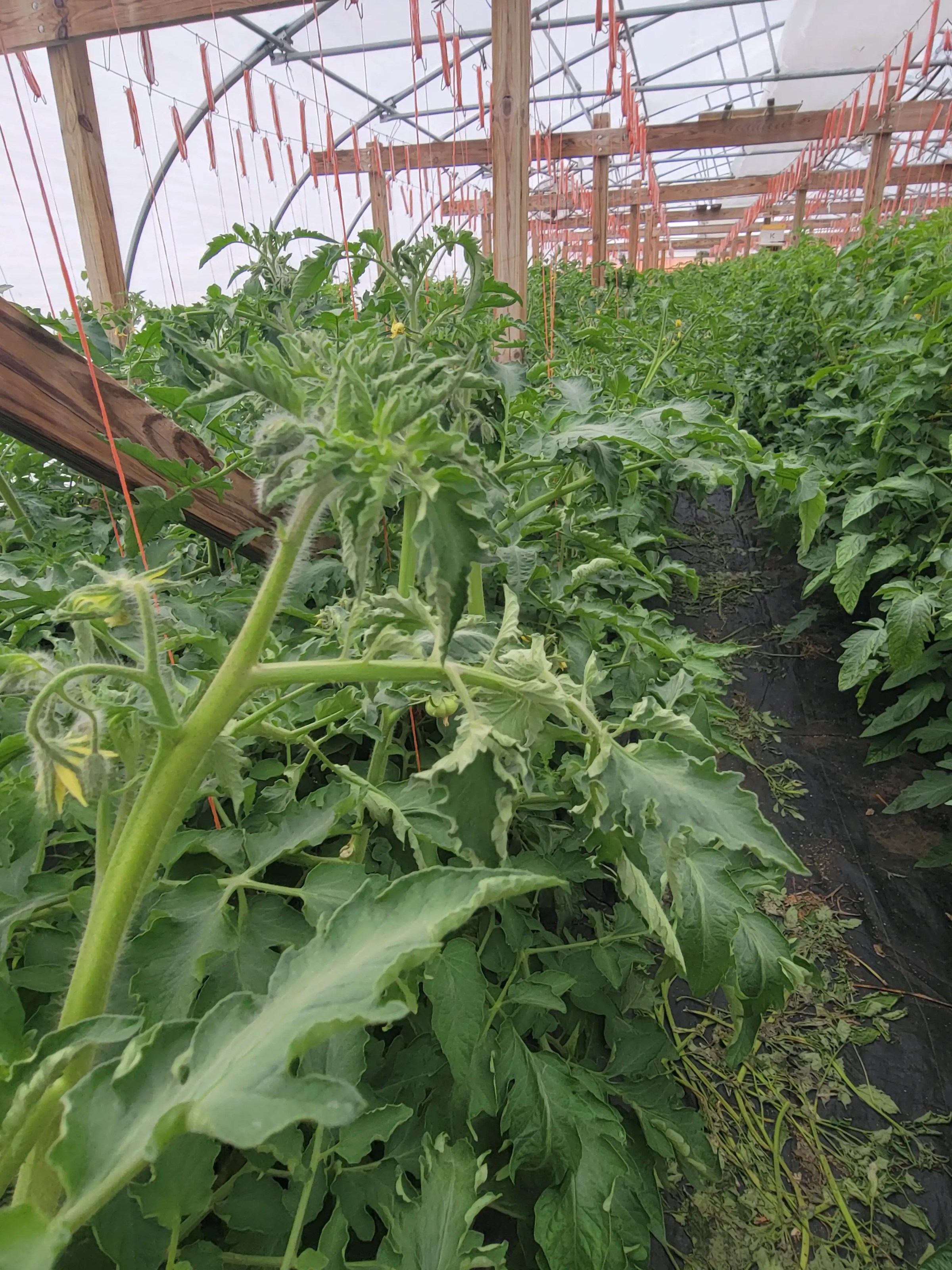
About three years ago, his tomato plants began looking sick.
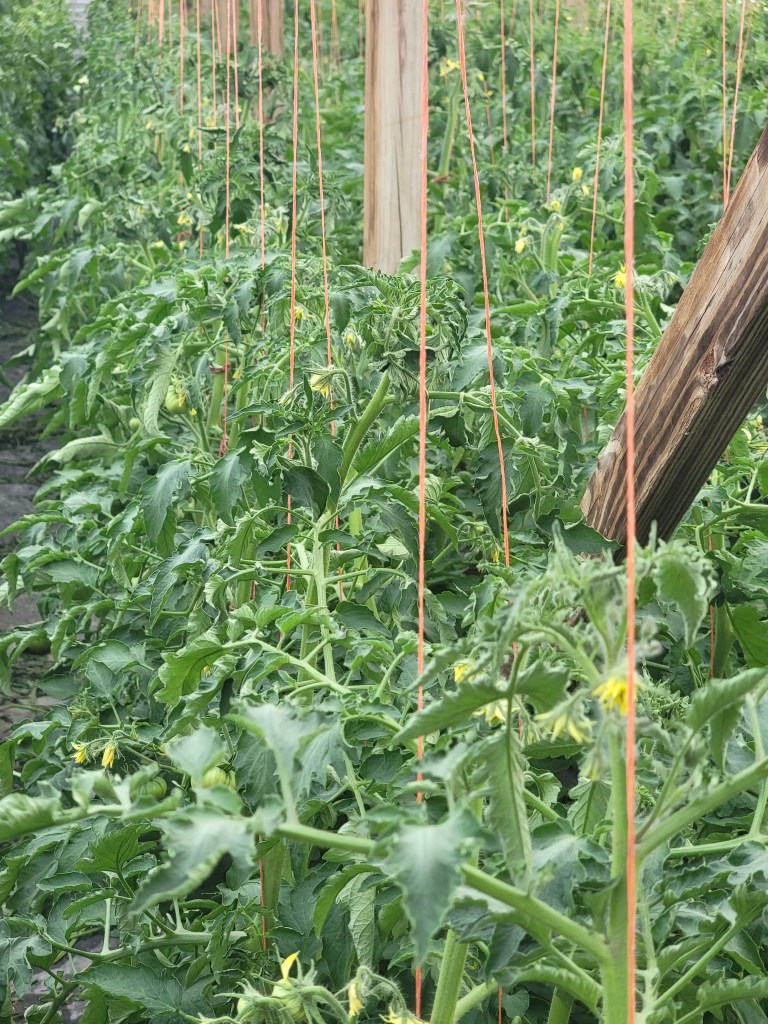
“At first I thought it was blight,” Tommy recalls. “The blooms kept falling off, the leaves curled up, and it just kept getting worse every year.”
He hired a mechanic to inspect his greenhouse ventilation and searched for every possible explanation.
Then one day he watched a nearby car dealership spraying weeds as the wind carried the mist directly toward his greenhouse.
The next morning, the leaves on his tomatoes curled.
“I knew immediately it wasn’t blight,” he says. “It was drift.”
Tommy filed a pesticide report with the Illinois Department of Agriculture. Investigators collected samples, and the dealership ultimately received a $500 fine.
But the problem didn’t stop.
Even after Tommy offered to pull or cut the weeds for the car dealership himself, the spraying continued. Soon, neighboring corn and soybean fields became an even bigger issue.
“I can’t plant a garden or anything outdoors anymore,” Tommy says. “The grapevines that had been here for 25 years have died. I’ve lost trees. My cucumbers die every year.”
Tommy attributes an increase in pesticide usage to cover crops– a widely encouraged conservation practice that helps farmers protect Illinois soil and water. “Conservation is important,” he notes, “but the farmers near me are using pesticides to terminate the cover crops in order to plant their corn and soybeans in the Spring. That’s doubling the amount of pesticides being sprayed. That’s not good conservation.”
Between 2023 and 2026, Tommy estimates he filed four or five pesticide misuse reports.
“I remember standing in my greenhouse one morning around 7:30 and smelling the pesticides drifting in. It was terrible.”
Tommy says the reporting process can be frustratingly slow and difficult to navigate.
“It can take months before you know what happened. Sometimes I have to file a Freedom of Information Act request just to get the lab results.”
He also questions whether the testing process always captures the full picture. Tommy says investigators typically ask the applicator what products were sprayed and then test for those products. He worries that if the information provided is incomplete, chemicals that may have drifted onto his farm might never be tested for.
“If they’re only testing for what they’re told was sprayed,” Tommy says, “how do they know what actually drifted onto my tomatoes?”
For two years, Tommy struggled through poor yields, shrinking sales, and mounting anxiety.
“I stopped going to the farmers market because I didn’t have enough product. People kept asking, ‘Tommy, where’d you go?’ I just couldn’t break even.”
Then, in 2026, his worst fears became reality.
A pesticide drift incident damaged every tomato plant in his greenhouse.
Within days, thousands of healthy plants were transformed. Their leaves curled and twisted, nearly every blossom dropped from the vines, and the crop that Tommy had spent months growing was suddenly in jeopardy. Laboratory testing confirmed the presence of the pesticides reported by the neighboring applicator, and the Illinois Department of Agriculture issued the applicator a warning. Meanwhile, Tommy is facing the loss of his farm.

Standing inside the greenhouse today, Tommy has no hope that the plants will survive.
“Maybe they’ll put out some side shoots and rebound a little,” he says. “But I won’t get the yield. The greenhouse will be a mess, and the tomatoes will be deformed.”
Tommy estimates he’ll lose roughly $25,000 in production costs alone, including greenhouse heat, growing media, fertilizer, and supplies. Simply heating the greenhouse costs between $1,800 and $2,000 every month– a bill he’s been paying since he planted tomatoes in December.
“I’ve got tens of thousands of dollars wrapped up in this thing—and it’s all ruined.”
The financial losses don’t stop there.
Years spent building relationships with grocery stores, restaurants, and farmers market customers are now at risk because he can’t fulfill his contracts.
“I had built up a clientele,” Tommy says. “Now I can’t provide for them. My grocery store customers will set up contracts with other farmers”
He explored taking legal action, but every attorney he contacted either declined the case or required a retainer he simply couldn’t afford.
“I don’t know what I’m going to do,” Tommy says. “How do I even do my taxes? Do I just write all of this off as a loss? I’ve just been sick with worry, and I don’t know where to go for help.”
For Tommy, the most difficult part isn’t just losing a crop—it’s feeling like there is no clear path forward. Despite reporting the incidents, cooperating with investigators, and documenting the damage, he says he has been left to shoulder the financial burden entirely on his own.
Unfortunately, Tommy’s story isn’t unique.
Across Illinois, fruit and vegetable growers, specialty crop producers, and diversified farms are reporting pesticide drift that damages crops, disrupts businesses, and threatens livelihoods. Many also describe a system that can be slow, difficult to navigate, and ultimately leaves farmers with few options to recover their losses—even when drift is confirmed.
“They say this stuff is safe,” Tommy says. “But we don’t have a choice. We’re breathing it in, and we don’t have a choice.”
Has pesticide drift affected your farm?
We’re collecting stories from farmers across Illinois to better understand how pesticide drift is impacting crops, businesses, and rural communities. Whether your experience happened this season or years ago, we’d like to hear from you.
Every story helps us document the problem, identify patterns, and organize farmers to work on practical policy solutions that better protect Illinois farmers and the communities that depend on them. If you’ve experienced pesticide drift, please consider sharing your story with us.